Cinematic Canvas Update
Resilient Pipelines & RAI Safety Interventions
Last month’s update established the foundation for parallel execution, introducing batch processing to maximize generative output. With concurrent operations hardened, this week’s focus shifted to workflow experimentation and handling the unpredictable nature of external LLM endpoints—specifically when models block content for safety constraints.
Instead of allowing unpredictable provider blocks to crash a batch workflow, the pipeline now catches and gracefully handles these exceptions. The result is a more resilient, non-blocking architecture that keeps the creative process moving.
Here is exactly how the platform evolved this week.
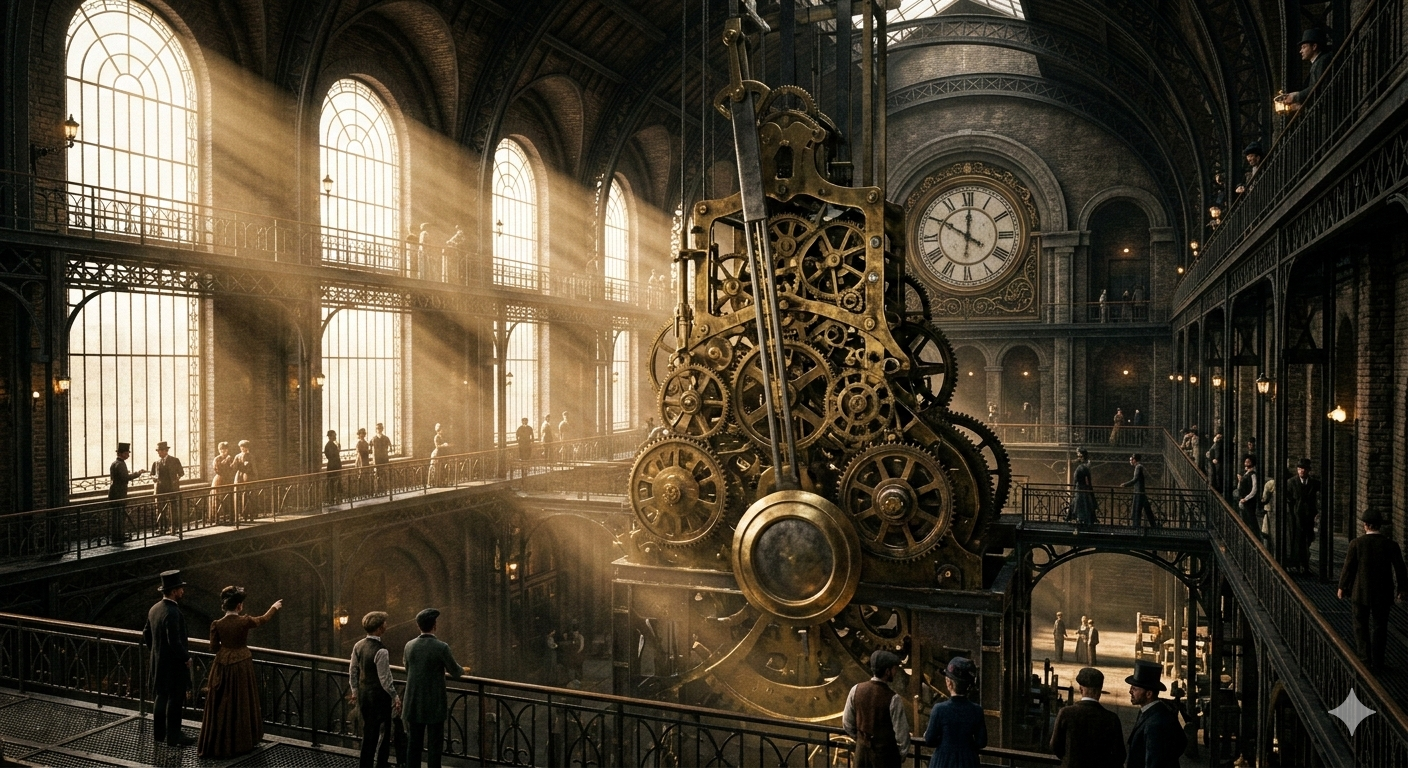 A resilient architecture relies on interlocking systems to bypass failures and keep the core mechanism turning smoothly.
What is Cinematic Canvas?
Cinematic Canvas is a generative film-making tool that treats storytelling elements as structured primitives—enforcing character persistence, narrative progression, and high-fidelity output across multi-scene workflows. We are building structured context for generative video.
Technology Stack: React, Node.js, PostgreSQL, Google Cloud Platform, Vertex AI
What’s New
Responsible AI (RAI) Safety Intervention Flow
Responsible AI (RAI) Safety Intervention Flow Generative models enforce strict safety filters, and false positives or edge cases previously caused entire generation jobs to fail. The new RAI safety error intervention flow catches these blocks gracefully. Instead of a catastrophic crash, the pipeline pauses, preserves the existing context, and prompts the user to modify the blocked prompt. This ensures valuable computational progress is not lost and gives creators clear, actionable feedback to resolve generation blocks.
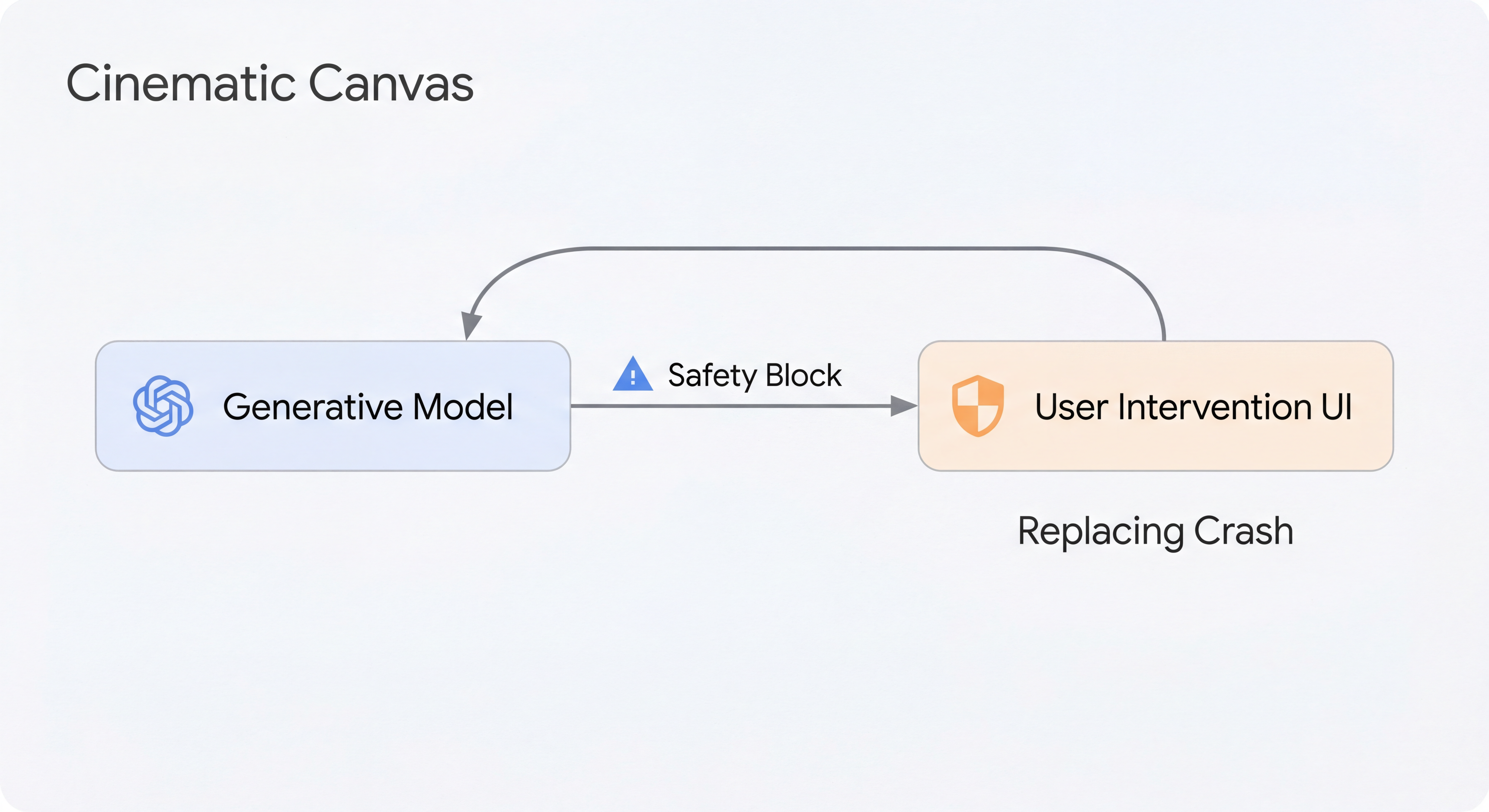 The RAI Safety Intervention flow catches generation blocks and routes them to user intervention without pipeline failure.
Non-Blocking Analytics And Prompt Evaluation Framework
Performance profiling identified that synchronous logging to analytics services caused significant I/O latency bottlenecks. The logging infrastructure now integrates PromptLayer via a non-blocking architecture. Prompt evaluations, token usage tracking, and generation analytics operate asynchronously. This improves the speed of the core generation loop while providing deeper observability into prompt efficacy and model behaviors.
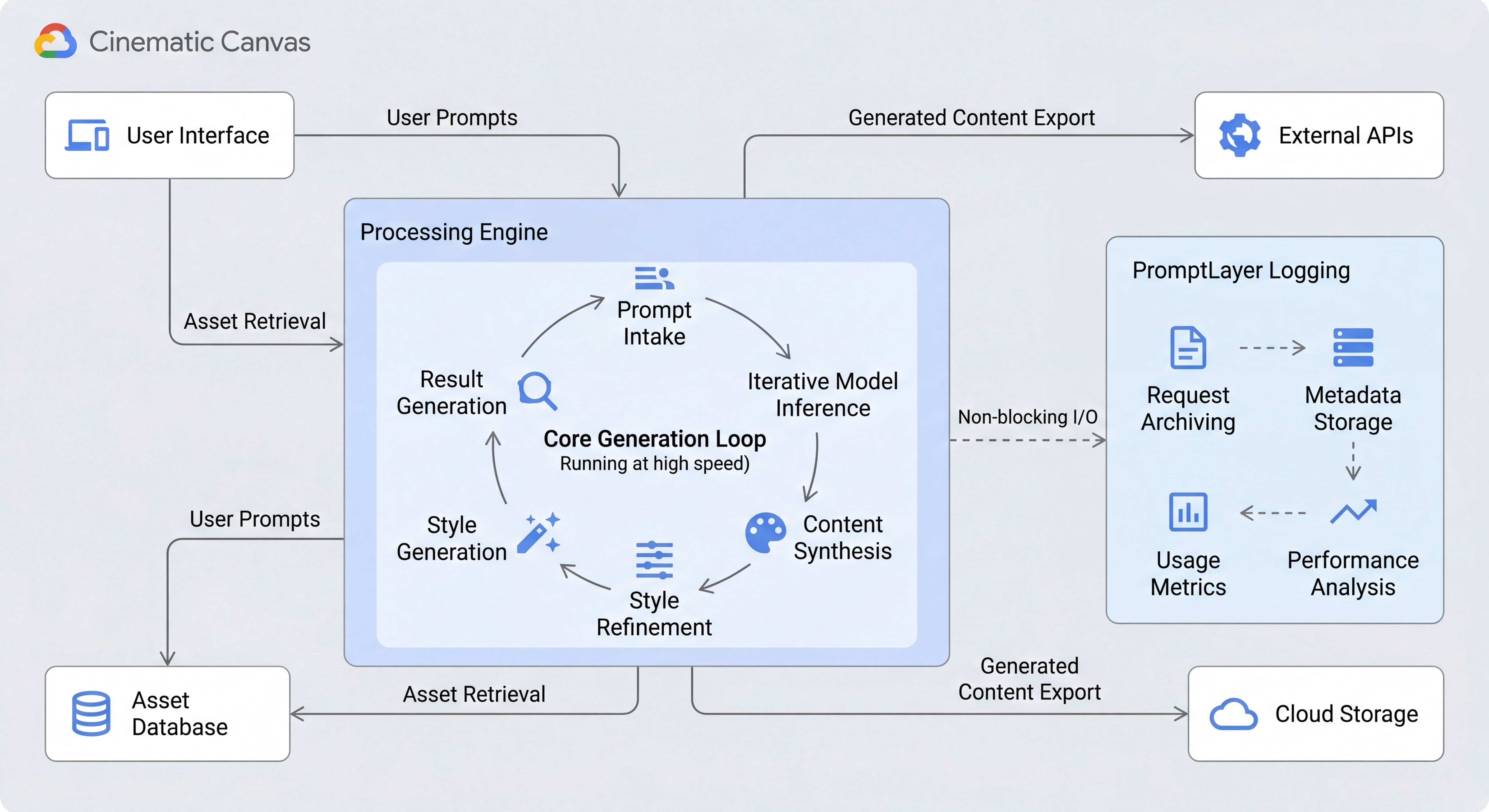 Asynchronous PromptLayer integration removes I/O latency from the core generation loop.
Dependency-Aware Batch Continuity
Building on last week’s goal of workflow experimentation, the continuity manager now features robust, dependency-aware batch scene generation. When generating multiple assets simultaneously, the system guarantees that dependent assets (like a character image required for a scene video) complete successfully before the dependent job executes. Batch retry logic isolates individual failures within a batch, preventing a single error from cascading and ruining the broader generation task.
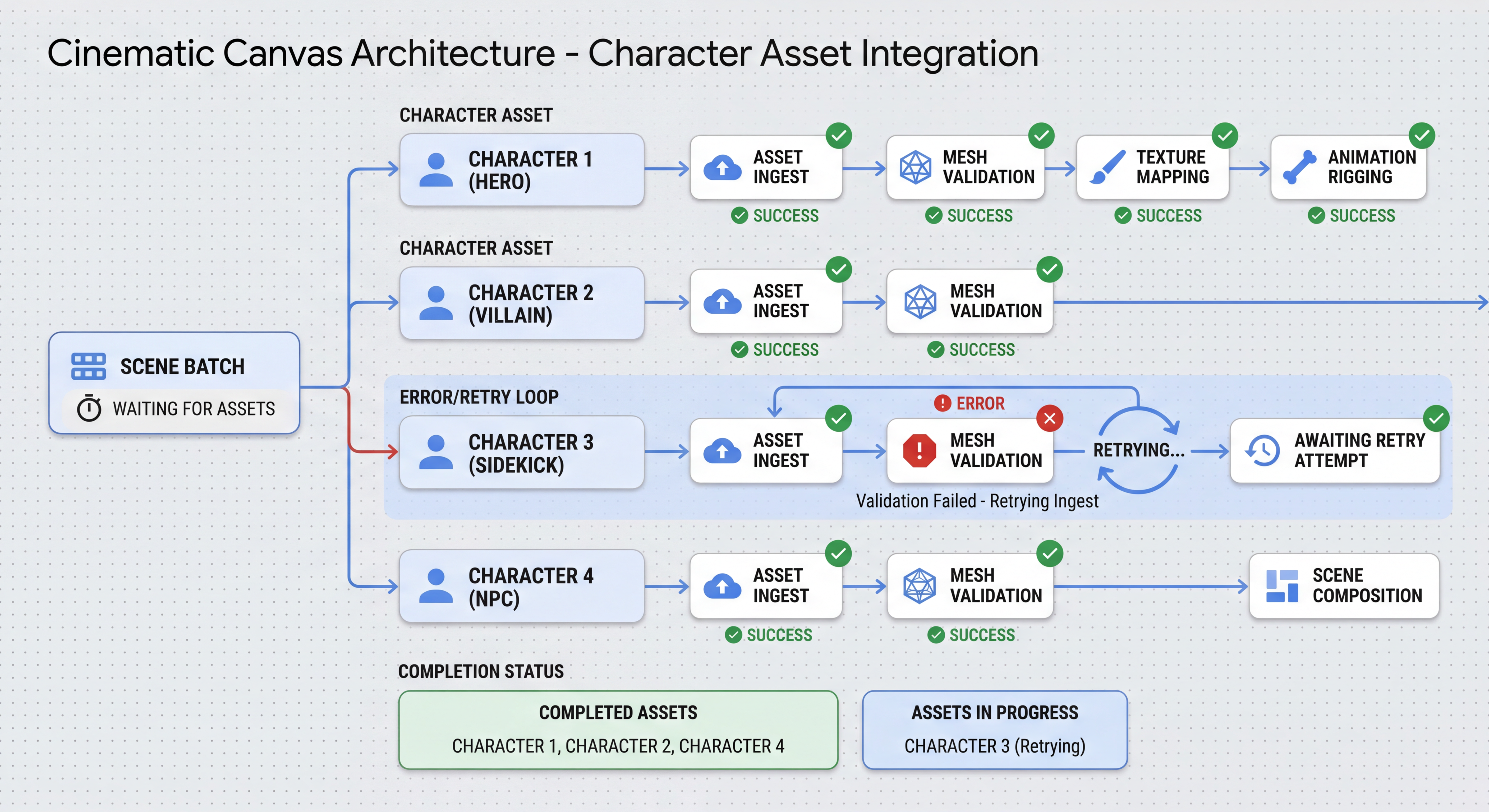 Dependency-aware continuity ensures video renders only begin after all required character and location assets successfully complete.
Performance & Traffic Simulation Progress
Last week’s roadmap included simulating traffic and load testing for 100 concurrent projects. While full production load testing was delayed to prioritize RAI safety mechanisms, the foundation for it was shipped. The platform now features a dedicated offline test mode. This allows the graph workflow to execute complex state transitions entirely locally without calling costly LLM endpoints, enabling rapid performance iteration and local load simulation.
What’s Shipping Next
The upcoming sprint focuses on elevating output control and expanding the platform’s architectural limits.
- Viral Load Simulation: Resuming load testing to ensure auto-scaled workers handle high-concurrency spikes.
- Continuity Contract Refinement: Systematic enhancements to continuity tracking to further enable structured storytelling context within the generative video pipeline.
- Advanced Storytelling Workflows: Integrating continuity-driven narratives across various output modes.
The platform continues to evolve into a robust creative tool. Cinematic Canvas is being built to enhance generative video storytelling—maintaining narrative coherence while gracefully handling the unpredictable nature of AI models.
🔗 View the changelog: github.com/digitalcreationsco/cinematic-canvas/blob/main/changelog.md
Thank you for reading. Steady progress and a great week ahead!
#GenerativeAI #GenerativeVideo #DistributedSystems #BuildInPublic #ResponsibleAI #PromptEngineering #SystemDesign